
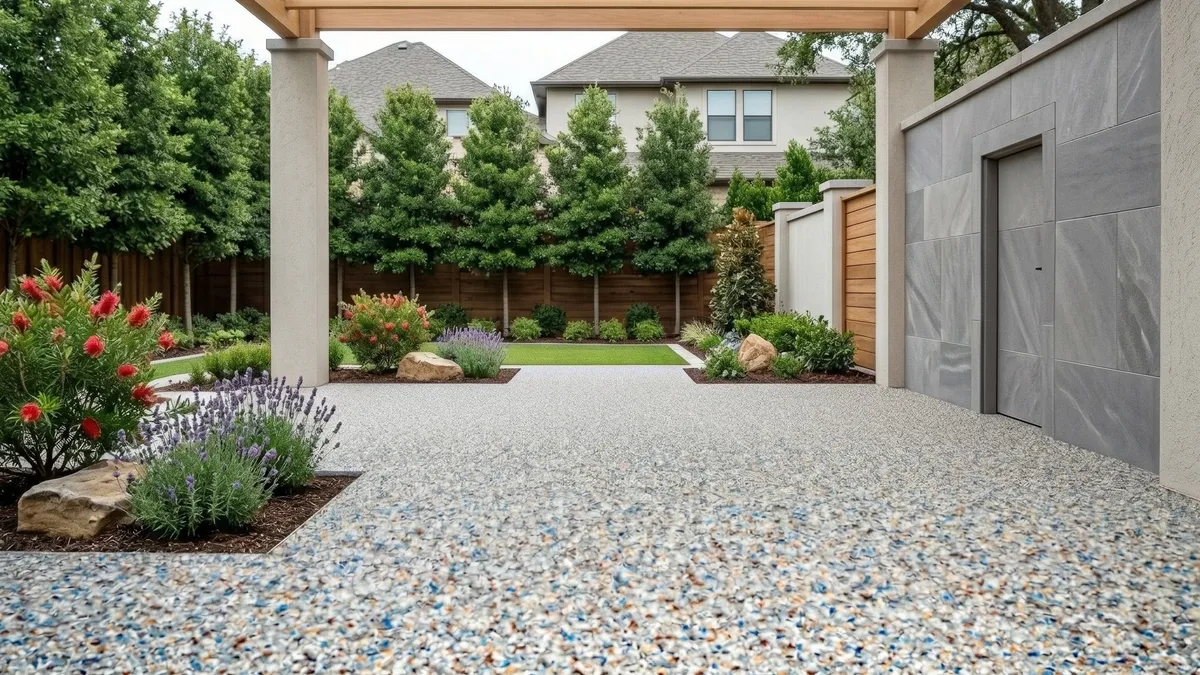
Outdoor kitchens are one of the biggest backyard investments in Dallas-Fort Worth — and one of the most common places we see a beautiful build sitting on tired concrete. The grill island is custom stone, the pergola is cedar, and the floor is a gray slab with hairline cracks and drink stains. The surface underfoot is the finish homeowners touch most and think about last.
Why Patios and Outdoor Kitchens Suit Rubber Surfacing
Comfort where people actually stand. An outdoor kitchen means standing — cooking, hosting, washing up. The cushioned TPV rubber matrix is noticeably more forgiving than concrete or stone during a long evening on your feet.
Traction around water and spills. Patios collect drink spills, ice, and splash from outdoor sinks; pool-adjacent patios collect wet feet. The textured surface is designed for exactly that traffic, with the usual caveat that drainage and cleaning still matter.
One continuous surface. Because the system is hand-troweled, the same color-blended surface can run from the covered kitchen area, through the open patio, down steps, and into the pool deck — no transition strips, joint lines, or mismatched finishes.
Covering the concrete you already have. Most DFW patios sit on structurally fine slabs that just look bad — stained, hairline-cracked from clay-soil movement, or simply dated. A stable slab is exactly what an overlay wants; the installation process guide covers how the surface gets prepared.
Design Considerations for Kitchen and Patio Areas
- Color blends — darker, speckled blends hide outdoor-dining wear well; lighter blends keep open areas more comfortable in the sun. Most projects mix zones.
- Borders and zones — a troweled-in border can visually separate the kitchen zone from the lounge or pool area on one continuous surface.
- Edges and thresholds — door thresholds, step noses, and island bases are planned in advance so the surface finishes flush and trip-conscious.
- Heat sources — layout around grills, smokers, and fire features gets reviewed during evaluation, the same way it should for any patio finish.
When It’s Not the Right Call
If the patio slab is heaving, sinking, or holding water, the base problem comes first — an overlay hides neither physics nor drainage. Our resurface vs. replace guide covers how to tell the difference. And if you want the look of natural stone specifically, rubber surfacing is a different aesthetic — the right comparison is worth making honestly, which is why we wrote a full surface comparison guide.
The Takeaway
If your outdoor kitchen or patio build deserves better than the slab it’s sitting on, send us photos of the space. Affordable Rubber Surfacing will evaluate the concrete, the drainage, and the layout, and tell you straight whether a seamless TPV overlay fits the project.
Frequently Asked
Can rubber surfacing be installed under a covered patio or pergola?
Yes. Covered areas are straightforward candidates because they see less UV and weather exposure than open decks. The existing slab still needs to be stable, clean, and properly prepared.
Is rubber surfacing safe around an outdoor kitchen or grill?
The surface is used around outdoor kitchen and dining areas, but placement matters — direct contact with dropped coals or extreme radiant heat should be avoided, just as it should with most patio finishes. ARS reviews the layout during evaluation.
Can the patio surface continue into the pool deck?
Yes, and that continuity is one of the main reasons homeowners choose it. Because the material is hand-troweled, one color-blended surface can flow from covered patio to open deck to pool surround without joints or transitions.
What about stains from food and drinks?
Routine washing handles most outdoor dining mess. Like any patio surface, prompt cleanup beats letting spills sit, and shaded areas should be kept clear of debris and algae.
See If Rubber Surfacing Is Right for Your Project
Share your contact info below — Affordable Rubber Surfacing will follow up by text for project photos and details, then schedule a free consultation.