
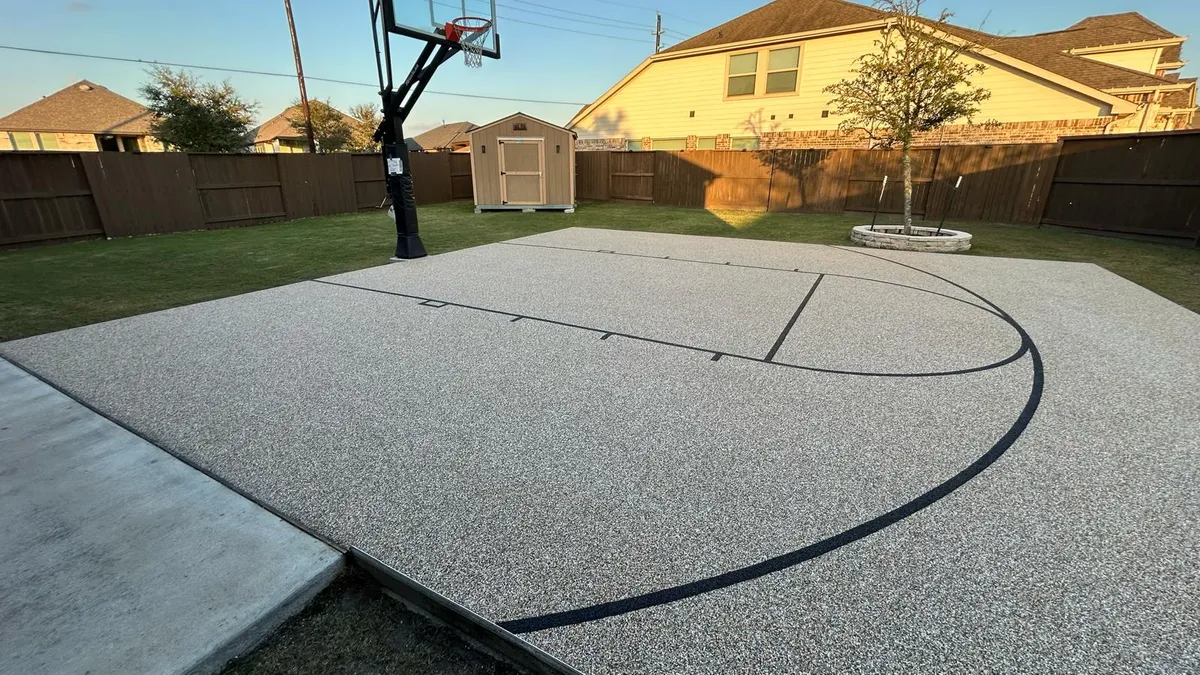
Amenity surfaces are where property budgets and resident satisfaction collide. The pool deck, playground, courts, and walkways generate the complaints, the incident reports, and the leasing photos — and they’re also the line items that get deferred until a board meeting turns tense. Having worked with HOAs, communities, and commercial properties across Dallas-Fort Worth, here’s the planning sequence we’d recommend to any property manager scoping resurfacing work.
Step 1: Walk the Property and Rank by Risk
Before any contractor visits, walk every amenity surface and sort problems into three buckets:
- Liability-adjacent — slick pool deck zones, lifted paver edges on walkways, hard surfaces under play equipment, trip points at transitions.
- Complaint generators — hot decks residents avoid, surfaces too harsh for kids or older residents, standing water.
- Cosmetic — staining, patchwork, faded finishes that hurt tours and photos but harm no one.
Bucket one drives sequencing. A resurfacing plan that starts with the highest-exposure surface is easy to defend to a board or owner.
Step 2: Find Out What the Slab Will Allow
The biggest budget variable isn’t the finish — it’s the base. Structurally stable concrete can usually take an overlay; failing concrete needs repair or replacement first, and no honest contractor can overlay around that. The difference between those two answers can reshape the whole budget, so get the substrate evaluated early. In North Texas, clay-soil movement makes this a genuine question on any deck more than a few years old — our resurface vs. replace framework covers how the call gets made.
Step 3: Phase Around Operations, Not Just Budget
Amenity closures are resident-relations events. Practical phasing rules:
- Pool decks — schedule outside peak swim season; a deck closed in October costs far less goodwill than one closed in July.
- Playgrounds and courts — can often run while the pool stays open, or vice versa, so residents always have something usable.
- Walkways — section-by-section phasing keeps routes open.
A contractor who asks about your occupancy patterns and event calendar before proposing a schedule is telling you something good about how they work.
Step 4: Budget the Lifecycle, Not the Invoice
Boards compare bids; owners live with surfaces. A cheaper rigid recoat that cracks again in a few seasons costs more across an ownership window than a properly prepared overlay done once — that math is laid out in our lifecycle cost analysis. When comparing bids, force them onto the same scope: material grade, prep steps, crack treatment, edge detail, exclusions. The questions-to-ask checklist works as a bid-leveling template.
Step 5: Standardize Across the Portfolio
If you manage multiple properties or a large community, set surface and color standards once. Repeating the same evaluated system across sites simplifies future budgeting, keeps amenities visually consistent, and turns each project into a template for the next — the approach we describe in our multifamily amenity guide.
The Takeaway
If amenity resurfacing is on your capital plan for this year or next, send us the property details — photos, surface list, and your operating constraints. Affordable Rubber Surfacing will evaluate what the slabs will allow, propose phasing that respects your calendar, and flag anything that needs base repair before finish work is worth discussing.
Frequently Asked
When is the best time of year to schedule amenity resurfacing in DFW?
Pool decks are best done outside peak swim season so closures don't hit residents' highest-use months. Fall through early spring is often the practical window in North Texas, but weather, cure conditions, and property schedules all factor in.
Should we get the whole property quoted or one amenity at a time?
Have the full scope evaluated even if you phase the work. A property-wide review lets you prioritize by condition and liability exposure, keep color standards consistent, and phase spending across budget cycles.
What information should we gather before requesting quotes?
Photos of each surface including problem areas, rough measurements, surface types, known drainage issues, incident or complaint history, and your operational constraints — when areas can close and for how long.
How do we compare bids that look completely different?
Force them onto the same scope: material grade, surface thickness, preparation steps, crack treatment, edge detail, and what's excluded. Most bid gaps live in prep and material quality, not margin.
See If Rubber Surfacing Is Right for Your Project
Share your contact info below — Affordable Rubber Surfacing will follow up by text for project photos and details, then schedule a free consultation.