
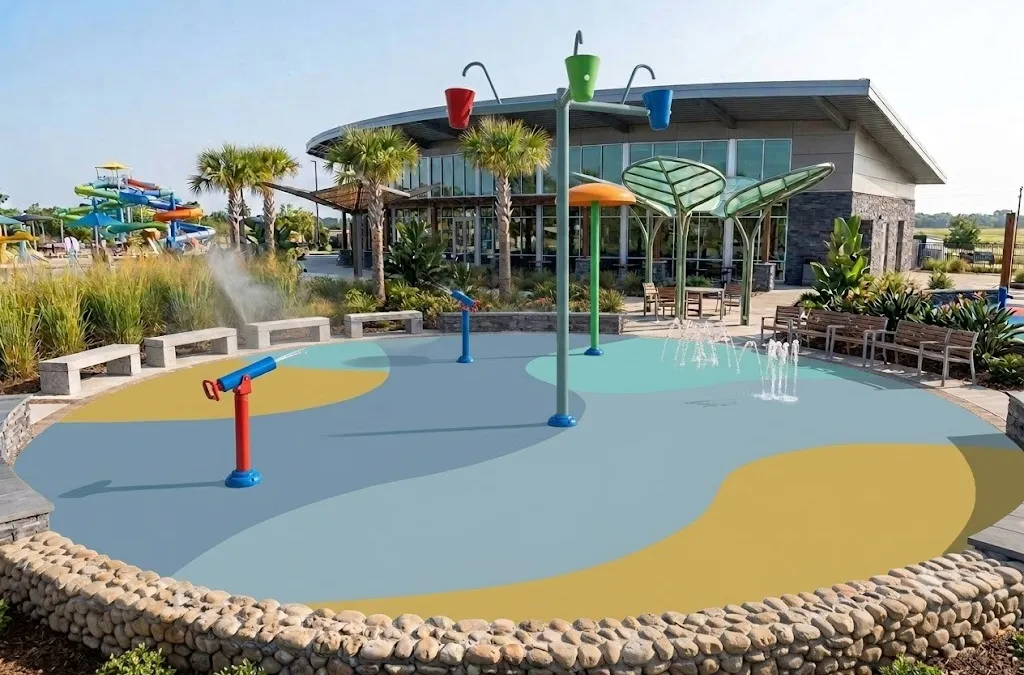
Every spring, the same thing happens: the weather warms up, families uncover the pool, and the deck that looked fine in November suddenly doesn’t — new cracks, worn patches, that same slick spot by the steps. Then the calls go out, and every surfacing contractor in Dallas-Fort Worth is booking into the exact weeks when everyone wants their deck usable. There’s a better sequence, and it starts when the pool closes, not when it opens.
The Case for Off-Season Resurfacing
The deck isn’t being used anyway. A pool deck resurfaced in October costs a family nothing in swim days, and costs an HOA or hotel almost nothing in resident or guest goodwill. The same project in June closes the amenity during its highest-value weeks — the phasing logic we walk through in our amenity planning guide for property managers.
The calendar is on your side. Fall bookings mean flexible scheduling instead of competing for peak-season slots. For commercial properties, it also aligns with budget season — many boards approve next year’s capital plan in fall, and a scoped, quoted project is easier to approve than a vague line item.
Winter is when the damage happens. North Texas concrete doesn’t rest in the off-season. Freeze-thaw cycles and clay-soil moisture swings keep working on the slab, which is why decks look worse each spring. Evaluating in fall means you know what you’re dealing with — and whether it’s an overlay candidate or a repair job — before the damage compounds.
Cure conditions are workable. Installation depends on temperature, moisture, and cure windows rather than the calendar. Plenty of DFW fall and winter days fall inside those windows; ARS confirms the specific timing for each project as part of the installation plan.
Who Benefits Most From the Off-Season Window
- Homeowners — the deck is transformed while nobody’s swimming, and ready the first warm weekend.
- HOAs and communities — amenity closures land in the lowest-use months, and the project fits the fall budget cycle.
- Hotels and resorts — commercial pool decks get renovated during lower-occupancy periods instead of during summer rates.
- Schools and daycares — play areas can be scheduled around breaks so surfaces cure while campuses are quiet.
How to Sequence It
- When the amenity closes: send photos, measurements, and problem areas for evaluation.
- Fall: site review, substrate assessment, scope and quote — in time for budget approvals.
- Fall/winter weather window: preparation and installation.
- Opening day: the surface has been done for months.
The Takeaway
If your pool deck, play area, or community amenity showed its age this summer, the best move is to act while it’s closed. Send Affordable Rubber Surfacing the details now and the project can be evaluated, scheduled, and finished long before anyone’s waiting on it.
Frequently Asked
Can rubber surfacing be installed in cooler months in North Texas?
In much of the DFW fall and winter, yes — installation depends on temperature, moisture, and cure conditions, not the calendar. ARS confirms the weather window for each project rather than promising a universal season.
Why not just wait until spring?
Spring is when everyone else calls. Scheduling ahead of the rush means more flexible dates, and the deck is ready on day one of swim season instead of closed during it.
Does an unused pool deck still deteriorate over winter?
Yes. North Texas freeze-thaw cycles and soil moisture swings work on concrete year-round. Cracks that appear over winter are why the deck looks worse every spring.
How far ahead should HOAs and commercial properties book?
As soon as the amenity closes for the season. Board approvals, bid comparison, and scheduling all take time, and the best off-season slots go to properties that started the process when the pool closed, not when it was about to reopen.
See If Rubber Surfacing Is Right for Your Project
Share your contact info below — Affordable Rubber Surfacing will follow up by text for project photos and details, then schedule a free consultation.