
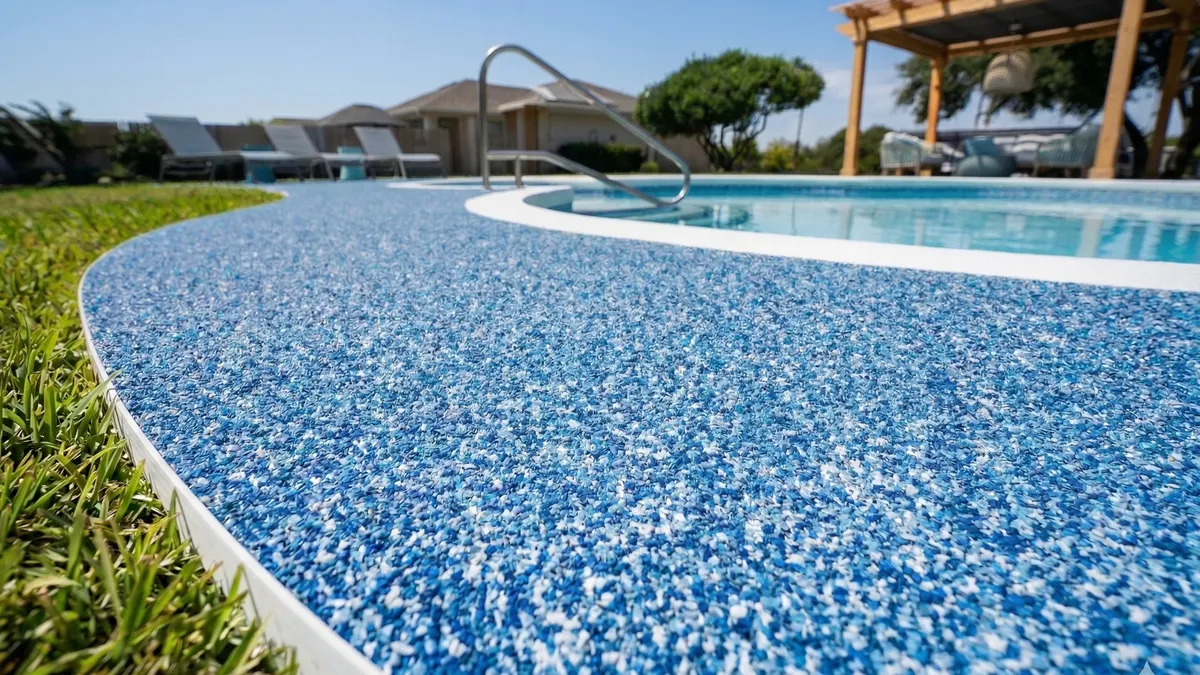
Pavers and natural stone are premium hardscape choices — until North Texas gets to work on them. Clay soil shifts, joints open up, sand washes out, weeds move in, and individual pavers start rocking or lifting at the corners. At that point, DFW homeowners and property managers usually assume they have two options: re-set everything, or tear it out. There’s a third worth knowing about: a poured-in-place rubber overlay.
When Pavers and Stone Are Good Overlay Candidates
The rule is the same one that governs any rubber overlay over concrete: the base must be stable. For pavers and stone, that means:
- Firm and locked in — pavers don’t rock underfoot or shift when pried.
- Settled, not settling — the surface may be imperfect, but it isn’t actively sinking or heaving season to season.
- Drainage that works — water moves off or through the area instead of pooling.
- Sound edges — borders, soldier courses, and transitions still hold the field in place.
When those hold, preparation can address joints and minor height differences, and the hand-troweled rubber system creates one continuous, cushioned, slip-resistant surface where there used to be dozens of joints and trip edges — the installation process is the same evaluate-prepare-trowel sequence used over concrete.
Why Owners Make This Trade
Trip edges disappear. Every lifted paver corner is a stubbed toe or a liability entry. A seamless overlay removes the joints entirely — a major reason HOAs and multifamily properties consider it for community walkways.
The maintenance cycle ends. No more joint sand, weed treatment, or annual re-leveling of the same sunken corner.
Comfort improves. Stone and concrete pavers are dense and hard; the TPV rubber matrix is cushioned and cooler-feeling underfoot than many dense materials in full sun.
The look changes — deliberately. This is an aesthetic decision as much as a functional one. You’re trading the masonry look for a seamless color-blended surface. If the stone appearance is the whole point of your patio, an overlay isn’t the right call, and we’ll say so.
When We’ll Tell You No
If pavers are extensively loose, the bedding sand has failed, tree roots are actively lifting sections, or clay-soil movement is still reshaping the area every season, covering it would just transfer the problem to a new surface. The honest sequence is base correction first, overlay second — or full replacement where the base is beyond saving.
The Takeaway
If your paver patio, stone walkway, or pool surround has become a maintenance project, send us photos — including close-ups of the worst joints and any loose sections. Affordable Rubber Surfacing will evaluate whether the surface is a genuine overlay candidate or whether the base needs work first, and quote accordingly.
Frequently Asked
Can rubber surfacing go directly over pavers?
Sometimes, yes — when the pavers are firm, locked in place, and properly prepared. Loose, rocking, or actively settling pavers need correction first, because an overlay can't stabilize a moving base.
Do the paver joints show through the rubber surface?
Preparation addresses joints before installation. The goal of the finished surface is a seamless appearance; the evaluation determines how much joint treatment and leveling the specific patio needs.
Is removing the pavers ever the better option?
Yes. If pavers are extensively loose, badly settled, or sitting on a failed base, removal or base repair can be the more honest recommendation than an overlay. ARS evaluates that before quoting.
What about flagstone and natural stone patios?
Similar logic: stable, well-set stone can be an overlay candidate after preparation; loose or lifting stone needs attention first. Each surface gets evaluated individually.
See If Rubber Surfacing Is Right for Your Project
Share your contact info below — Affordable Rubber Surfacing will follow up by text for project photos and details, then schedule a free consultation.