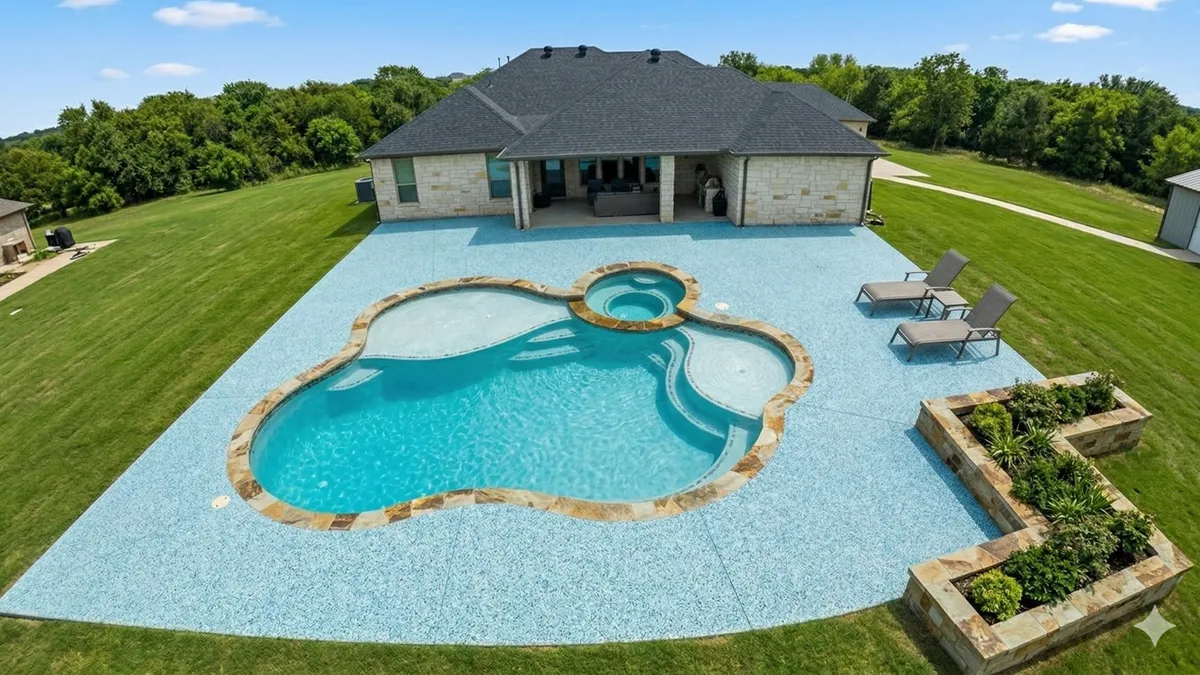
A pool remodel usually starts with plaster, tile, coping, or equipment, but the deck around the pool often gets treated as an afterthought, even when it’s cracked, dated, or uncomfortably hot underfoot. That’s usually where the client’s actual dissatisfaction ends up.
At Affordable Rubber Surfacing, we work as a specialty subcontractor for DFW pool remodelers, pool builders, and outdoor living contractors who don’t self-perform poured-in-place TPV rubber installation but have clients asking about it.
The Gap a Lot of Remodels Leave Open
A full pool renovation can update everything below the waterline and still leave the surrounding deck looking exactly like it did before, cracked, hot, or visually mismatched with the new finish. Clients notice. If the remodeler doesn’t have an answer for the deck, the client goes looking for one elsewhere, sometimes after the main project is already finished.
Situations Where Bringing In a Specialist Makes Sense
The existing deck is cracked, but tear-out isn’t the goal. If the slab is stable but the surface is unattractive or worn, an overlay can often be evaluated as an alternative to full demolition. Our resurface vs. replace guide covers how that call gets made.
The deck has pavers or stone that clients find uncomfortable. Rough or uneven pavers, hot stone, or dated stamped concrete are common complaints during a pool remodel consult. ARS can review whether those surfaces are suitable for an overlay.
The client specifically asks about heat, slip resistance, or a seamless look. These are the three most common reasons homeowners bring up rubber surfacing during a remodel conversation, and they’re outside most pool remodelers’ typical scope.
The project includes an HOA or commercial pool. Community and commercial pool renovations often involve deck evaluation as part of the broader scope, which is a natural fit for a specialty surfacing partner.
What This Looks Like in Practice
ARS reviews the existing base, drainage, edges, coping transitions, and design goals, then provides a project-specific plan the remodeler can present to the client as part of the overall renovation, rather than treating the deck as a separate, disconnected purchase. The remodeler keeps the client relationship; ARS handles the surfacing evaluation and installation.
Bringing ARS In Early vs. Late
Involving a surfacing specialist earlier in the planning process, before the deck plan is finalized, generally produces a cleaner result than bringing one in after coping, drains, and equipment placement are already locked in. If cracked concrete, drainage questions, or uneven pavers are part of the project, that’s the signal to make the call early rather than after the fact.
Partnering With ARS
If you’re a pool remodeler, builder, or outdoor living contractor with a project where the deck is part of the conversation, see our rubber surfacing partner guide for how the partnership works, or reach out directly to discuss a specific project.
Schedule Your Free Commercial Consultation Today
Frequently Asked
At what point in a pool remodel should a rubber surfacing specialist get involved?
Ideally before the deck plan is finalized, especially if the project involves existing cracked concrete, uneven pavers, drainage concerns, or coping transitions. Early review helps determine whether an overlay is appropriate and what prep it would need.
Does bringing in a specialty subcontractor slow down the remodel?
Not inherently. ARS evaluates the site and provides a project-specific timeline as part of the broader renovation schedule, coordinated with the remodeler's timeline rather than run separately.
Can ARS work with our existing crew and schedule?
Yes. ARS is typically brought in for the specialty surfacing scope while the remodeler manages the overall project, client relationship, and other trades.
See If Rubber Surfacing Is Right for Your Project
Share your contact info below. Affordable Rubber Surfacing will follow up by text for project photos and details, then schedule a free consultation.