If you’re planning a backyard basketball hoop, a pickleball court, or a multi-use pad for both, the surface underneath matters as much as the equipment on top of it. Concrete and asphalt are the default answers most contractors reach for, but they aren’t the only option, and in DFW, they come with a specific downside.
The Problem With Concrete and Asphalt Courts in DFW
North Texas clay soil expands and contracts with moisture, and rigid surfaces like concrete and asphalt don’t flex with it. Over a few years, that movement shows up as cracks, uneven seams, and trip hazards, exactly where you don’t want them on a court where people are running, jumping, and landing.
Concrete and asphalt also get hot and hard underfoot in direct summer sun, and neither offers much cushioning for joints during repeated play.
Where Poured-in-Place Rubber Fits
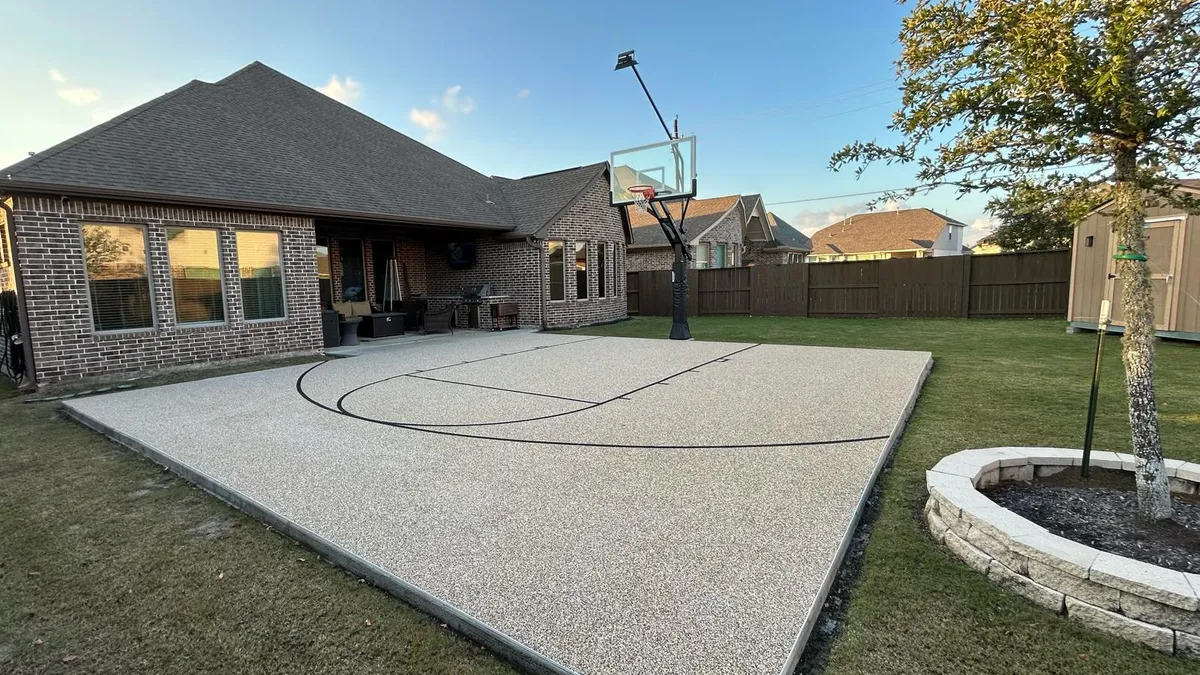
A hand-troweled TPV rubber surface is installed over a stable, prepared base and offers a few specific advantages for backyard courts:
- More flexible than rigid concrete, which can help it handle minor soil movement better than an unreinforced slab (though no surface eliminates the effects of DFW clay soil entirely).
- Cushioned underfoot, which matters for recreational players and anyone concerned about joint impact over repeated sessions.
- Custom game-line striping for basketball, pickleball, or both on the same pad.
- A cooler surface than dark asphalt or bare concrete in direct sun, with lighter color options.
What to Consider Before Choosing
Intended use matters. A backyard court for family games and casual pickleball has different priorities than a court built for serious training. Rubber surfacing is a strong fit for the former; if tournament-spec bounce and ball speed are the priority, that’s worth discussing directly.
Existing base condition. If you already have a concrete or asphalt pad, ARS can evaluate whether it’s a suitable candidate for a rubber overlay or whether repair comes first. Our resurface vs. replace guide covers that decision in more depth (written for pool decks, but the same logic applies to a court pad).
Combining sports on one pad. If you want basketball and pickleball lines on the same surface, tell your installer up front, pad dimensions and striping need to be planned together.
Planning Your Backyard Court
See our backyard basketball and pickleball court guide for a fuller look at how these projects are scoped, or reach out to discuss your specific space and equipment plans.
Schedule Your Free Consultation Today
Frequently Asked
Is rubber surfacing better than concrete for a backyard court?
Neither is automatically better. Concrete and asphalt are common, lower-cost options that can crack over time with DFW's clay soil. Poured-in-place rubber is more flexible and joint-friendly, but the right choice depends on your budget, intended use, and the existing base.
Can I put a pickleball and basketball court on the same pad?
Often, yes, when the pad dimensions support it. ARS can plan custom game-line striping for one or multiple sports on the same surface.
Will a rubber court crack the way my concrete court did?
No system eliminates the effects of DFW's clay-soil movement entirely. A poured rubber surface is more flexible than rigid concrete, but the base still needs proper preparation and evaluation for site-specific drainage and soil conditions.
Is rubber surfacing suitable for competitive-level play?
It's a strong fit for recreational backyard play where comfort and joint-friendliness matter more than tournament-spec bounce and ball speed. ARS reviews your intended use before recommending a system.
See If Rubber Surfacing Is Right for Your Project
Share your contact info below. Affordable Rubber Surfacing will follow up by text for project photos and details, then schedule a free consultation.