A splash pad puts a surface through conditions most patios and pool decks don’t see: constant water, bare feet, and kids moving fast on a wet surface. Whether you’re planning a backyard water feature or a community amenity, the surface underneath does more work than it gets credit for.
At Affordable Rubber Surfacing, we work with DFW families and HOA/municipal clients evaluating surfacing options for splash pads and water play areas.
Comparing Common Splash Pad Surfaces
Concrete
Pros: Familiar, lower upfront cost, widely available.
Cons: Smooth concrete gets slick when wet, and dark concrete can get hot in direct Texas sun between water cycles.
Pavers or Stone
Pros: Decorative appearance, modular installation.
Cons: Joints between pavers can trap standing water, grow algae, and become slick over time, the opposite of what you want around a water feature.
Poured-in-Place TPV Rubber
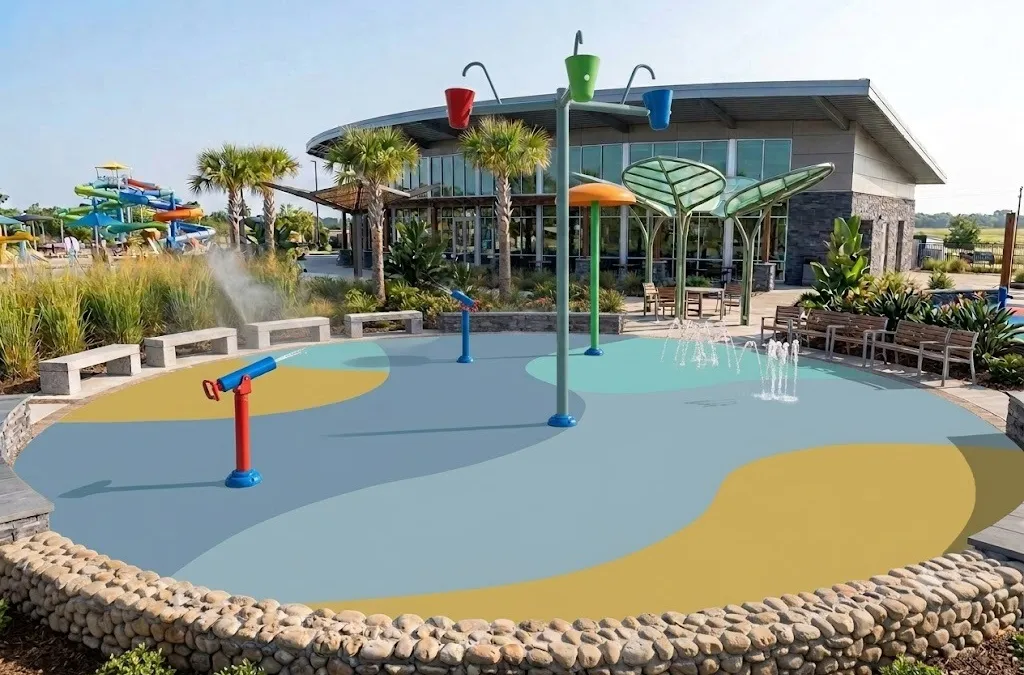
Pros: A seamless, textured surface with no joints to trap water or grow algae, designed specifically for wet-area traction. Drains without the gaps a paver system has.
Cons: Higher upfront cost than concrete; requires a stable, properly graded base and professional installation.
What to Evaluate for a Splash Pad Project
- Existing drain layout and water feature equipment: the surfacing has to work around these fixed elements, not replace them.
- Grading and slope: water needs somewhere to go, both for safety and to prevent standing puddles.
- Traffic and use: a backyard splash pad for occasional family use has different priorities than a community amenity used daily by dozens of kids.
- Sun exposure: an open splash pad in direct sun has different heat considerations than a shaded one.
Residential vs. Commercial Splash Pads
The underlying surfacing question is similar whether you’re planning a backyard water feature or a community or municipal splash pad, but commercial projects typically add traffic volume, procurement documentation, and phased-access considerations to the evaluation. See our backyard splash pad guide for the residential scope, or our parks and recreation surfacing guide for municipal and commercial combo projects.
Planning Your Splash Pad Surface
If you’re planning a splash pad, whether for your backyard or a community amenity, ARS can evaluate your site’s drainage, existing equipment, and use case to help determine the right surfacing fit.
Schedule Your Free Consultation Today
Frequently Asked
What's the best surface for a splash pad?
It depends on your priorities. Concrete is common and low-cost but gets slick when wet and can get hot in direct sun. Pavers have joints that can trap water and grow algae. Poured-in-place rubber is designed for wet-area traction and drains without joints, but at a higher upfront cost.
Is rubber surfacing slippery when wet?
A properly textured poured rubber surface is designed for traction in wet conditions, which is a common reason it's chosen over smooth concrete or tile around water features. Drainage, slope, and surface cleaning still affect performance, and ARS evaluates those on-site.
Can rubber surfacing handle standing or chlorinated water?
Extended standing water and water chemistry are reviewed on a project-specific basis. Proper drainage and slope are part of any splash pad evaluation, residential or commercial.
Is backyard splash pad surfacing the same product used at public splash pads?
ARS installs the same poured-in-place TPV rubber system for residential backyard water play areas and municipal or commercial splash pads, evaluated for each site's specific drainage and use conditions.
See If Rubber Surfacing Is Right for Your Project
Share your contact info below. Affordable Rubber Surfacing will follow up by text for project photos and details, then schedule a free consultation.